
D&D 2024 for New Players: Everything You Need, Nothing You Don’t
From the outside, Dungeons & Dragons looks like a cult with better snacks.
Grown adults, sitting around a table, arguing about whether a fireball melts gold coins. Three-hundred-page rulebooks. People who say "actually" the way the rest of us breathe. If you've ever watched a group play and thought "I could never do that," congratulations — you're exactly who this is for. Because the secret nobody tells you is this:
It's just make-believe with dice. You did this at age six. You were great at it. Then someone told you to grow up, and you listened, and look where that got you — reading a blog post about elf games at 11pm.
The 2024 rules? They're the same game with the rough edges sanded off. Here's the no-BS version.
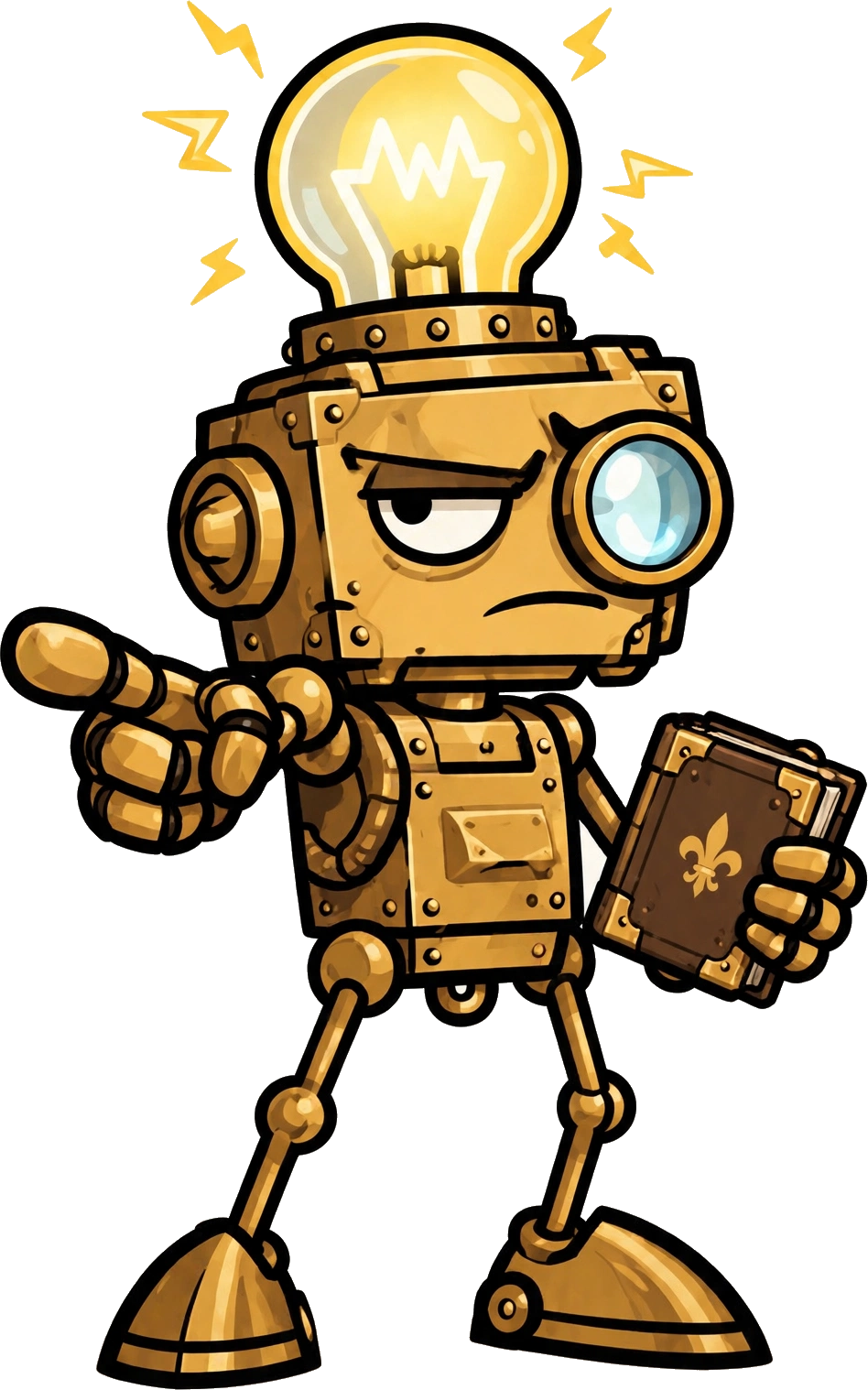
WATT: I've audited seventeen cults across nine planes of existence. The snack situation here is the only thing up to code. Proceed.
What D&D Actually Is (30 Seconds)
One person — the Dungeon Master — describes a situation. You and your friends say what your characters do about it. When the outcome is uncertain, you roll dice. That's the whole thing. Everything else is decoration.
It's not a board game. There's no winning. There's no finish line. It's collaborative storytelling where the dice occasionally ruin everyone's plans, and those ruined plans become the stories you tell for years. Nobody reminisces about the time everything went smoothly. They reminisce about the time the bard seduced the dragon by accident.
FROM THE BOOKS — Memorable Monsters: "Deep within a dark and dreary bog, a lonely creature stalks within the shadows and thick mists. When unsuspecting victims pass along the murky waters, the creature uses clever tricks and magic to lure prey into her clutches. One may hear a beautiful disembodied voice whisper into their ear, encouraging them to leave the path." — The Swamp Siren, from Memorable Monsters. This is the kind of thing waiting for you.
What Does "2024" Mean?
In 2024, Wizards of the Coast released a revised Player's Handbook — same 5th Edition you've heard about, tuned up. Fully backwards compatible, which is a fancy way of saying your friend's old books still work.
The changes that actually matter to you, a human who has never played:
- Your background matters now. Your character's backstory gives you real mechanical benefits, including a free feat. Picking "Urchin" isn't just flavor anymore — it's a build choice.
- Weapons got interesting. Every weapon has a special trick now — push enemies, graze on a miss, slow them down. The fighter isn't just "I attack" on loop.
- The classes got reworked. All twelve. Mostly buffs, mostly fun.
- Less homework. The rules are organized like someone finally asked a new player to find something in the book and watched them cry.
You don't need to memorize any of this. I'm telling you so that when some veteran at the table says "well in my day," you can nod politely and keep having fun.
What You Actually Need (It's Less Than You Think)
The gatekeepers will tell you that you need $150 worth of books, a dice tower carved from a single piece of oak, and a backstory approved by a committee. The gatekeepers are why people think this hobby is impenetrable. Ignore them.
You need:
- The free Basic Rules. Wizards gives away the core rules as a free PDF. Free. Zero dollars. It covers everything in this article and then some.
- Dice — or an app. A set of polyhedral dice costs less than a sandwich. Or use a free dice roller on your phone. The plastic rocks are traditional, but the phone works fine and nobody worth playing with will judge you.
- Humans. Three to six of them. Friends, coworkers, that cousin who won't stop talking about their Warhammer army. This is the hardest item on the list, and it's not close.
- Snacks. Non-negotiable. This is a three-hour commitment and the social contract demands chips.
That's it. If you want the full experience later, the 2024 Player's Handbook is the one book worth owning — everything else is optional until you're hooked. (And you will be. They always come back.)
Your First Character in 10 Minutes
Character creation looks terrifying. It's a bunch of numbers and choices and people using words like "optimization." Here's the fast version:
- Pick a vibe. Sneaky? Stabby? Magical? Holy? Start with a fantasy archetype you already love from books or movies.
- Pick a class that matches. Fighter hits things. Rogue sneaks. Wizard explodes things (sometimes including the party). Cleric keeps everyone alive and judges them for it.
- Pick a species and background. Elf, dwarf, human, whatever sounds fun. Background: where'd you come from? Urchin, soldier, scholar. This now gives you actual bonuses, so enjoy it.
- Roll or assign your stats. Six numbers. Put the big ones where your class needs them. Done. Don't overthink it.
- Write two sentences of backstory. Not fourteen pages. Two sentences. "Grew up stealing bread in the big city. Now steals slightly bigger things for slightly better reasons." Your DM will love you.
Pro tip: your first character will probably die or be retired within six sessions, and that's fine. They're a rental car. Drive them like it.
How a Session Actually Plays
The DM sets the scene: "You're in a tavern. A hooded figure slides into your booth and whispers that the mayor is a lizard."
You say what you do: "I ask what proof they have. Also I'm watching their hands."
The DM decides if dice are needed: "Roll Insight."
You roll a d20, add your Insight bonus, and the DM tells you what happens. Roll high: you notice the figure's scales. Roll low: you believe every word and immediately volunteer to fight the mayor.
That loop — describe, declare, roll, react — is the entire game. The rules exist to resolve arguments fairly, not to replace your imagination. When in doubt, the DM makes a ruling and you keep playing. Anyone who stops the game for twenty minutes to look up a rule has missed the point so hard they lapped it.
Three Rookie Mistakes (Free of Charge)
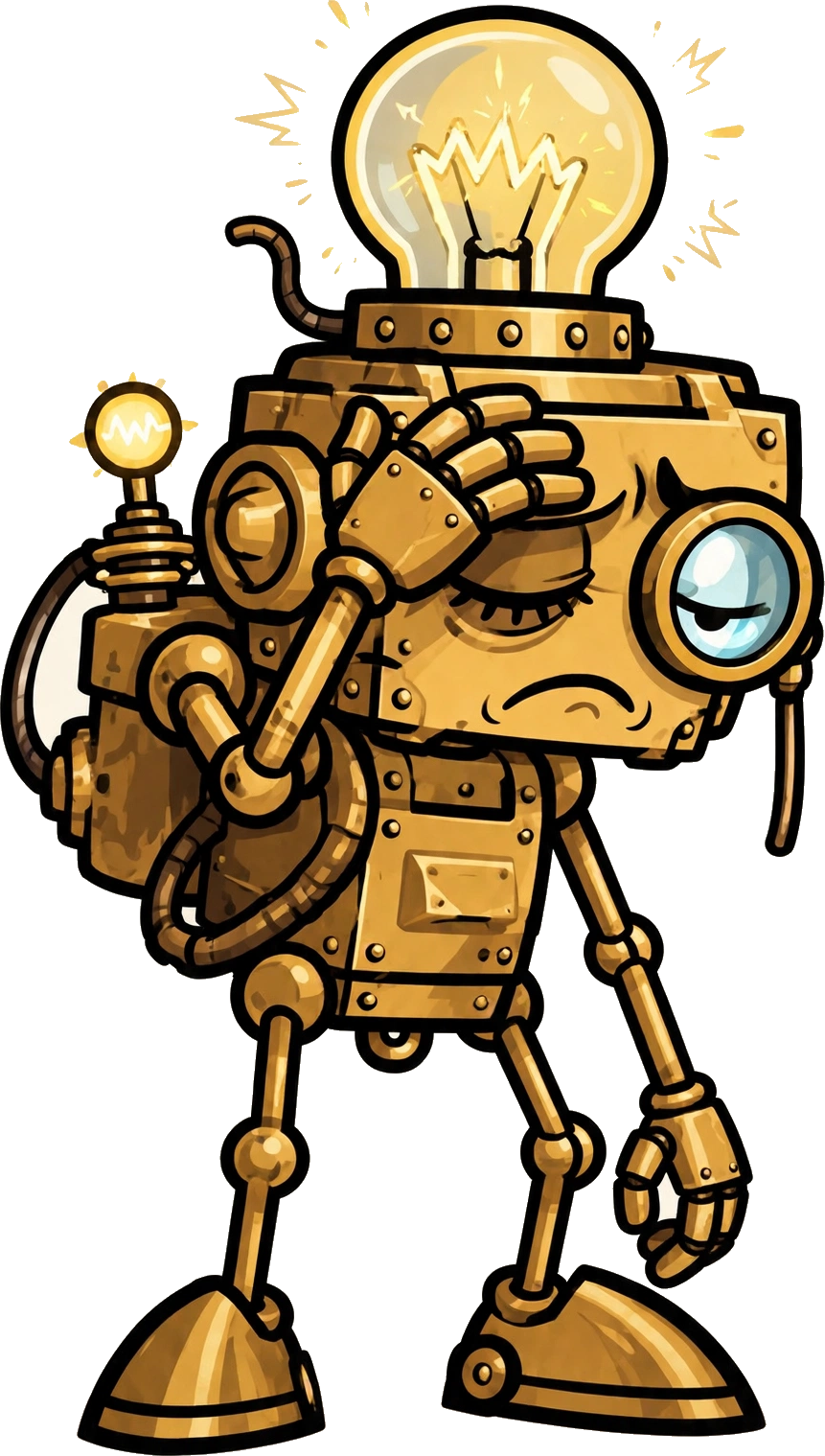
WATT: Fourteen pages. FOURTEEN. I've processed tax codes with less padding. Two sentences. I'm logging this as a violation.
1. The fourteen-page backstory. Nobody's reading it. Least of all the DM, who has a whole world to run. Two sentences. Mystery is a gift — to yourself.
2. Trying to "win." There's no scoreboard. The player who "wins" D&D is the one who made everyone laugh so hard the DM had to call a break. Play to make the story interesting, not to beat it.
3. Main-character syndrome. You're one member of an ensemble cast, not the protagonist of a novel nobody else agreed to be in. Share the spotlight. Set up other players' big moments. The table will love you for it, and the dice will reward you. (The dice won't reward you. But the table will.)
Your First Adventure (When It's Suddenly Your Problem)
Here's what happens to roughly 60% of new players: you play three sessions, you love it, and then your DM burns out, moves away, or ascends to a higher plane — and someone looks at you and says "you should run the next one."

WATT: Sooner or later, every player gets voluntold to DM. It's practically a multiversal constant. I have the paperwork.
Don't panic. You don't need to write a world. You need a notice board.
Bountiful Bounties is fifteen ready-to-run quests — the kind of jobs pinned to a tavern wall: missing caravans, haunted mills, bounties with teeth. Zero prep. Open the book, pick a bounty, read the boxed text out loud, and you're DMing. It's system-agnostic, it's $7.99, and it's the difference between "I'd love to run a game someday" and running one tonight.
Every DM started exactly where you are: terrified, underprepared, and one good adventure away from being hooked for life.
FROM THE BOOKS — Memorable Monsters: "Albus is bitter and jaded. He no longer cares for his deity, nor for his identity as an angel. His only motivation is wealth. The more he amasses, the more he can forget his past failures. As a skilled assassin, Albus takes on the highest paying contracts to eliminate targets of any description." — Albus, The Gleaming. Fallen angel. Assassin for hire. Your players will never see him coming.
Where to Go From Here
- Learn by listening. The Crit Academy podcast is years of DMs and players breaking down what actually works at the table. Put it on during your commute and you'll show up to your first session suspiciously well-informed.
- Steal from the pros. Our DMs Guild catalog is full of player options, tips, and tricks — including multiple bestsellers. Browse, grab what looks fun, thank us later.
- Get the book. When you're ready for the full toolbox, the 2024 Player's Handbook is the single best purchase in the hobby.
And remember the only rule that matters: the game is supposed to be fun. If a rule gets in the way of fun, the rule is wrong. That's not rebellion — that's literally in the book.
Now go roll some dice. Keep your blades sharp and your spells prepared, heroes.
New to Crit Academy? We're a D&D talk show and 5th Edition publisher making monsters, magic items, and mayhem since 2016. Browse the store — your table will thank you.