Every DM knows the moment. The party walks into town, ignores the three plot hooks you spent Sunday afternoon building, and asks the barkeep what else is going on around here. And you, a professional improviser with a crippling note-taking habit, say the four most dangerous words in tabletop gaming: let me check my notes.
There is a better way. It is a piece of wood with paper nailed to it.

What Is a Notice Board in D&D?
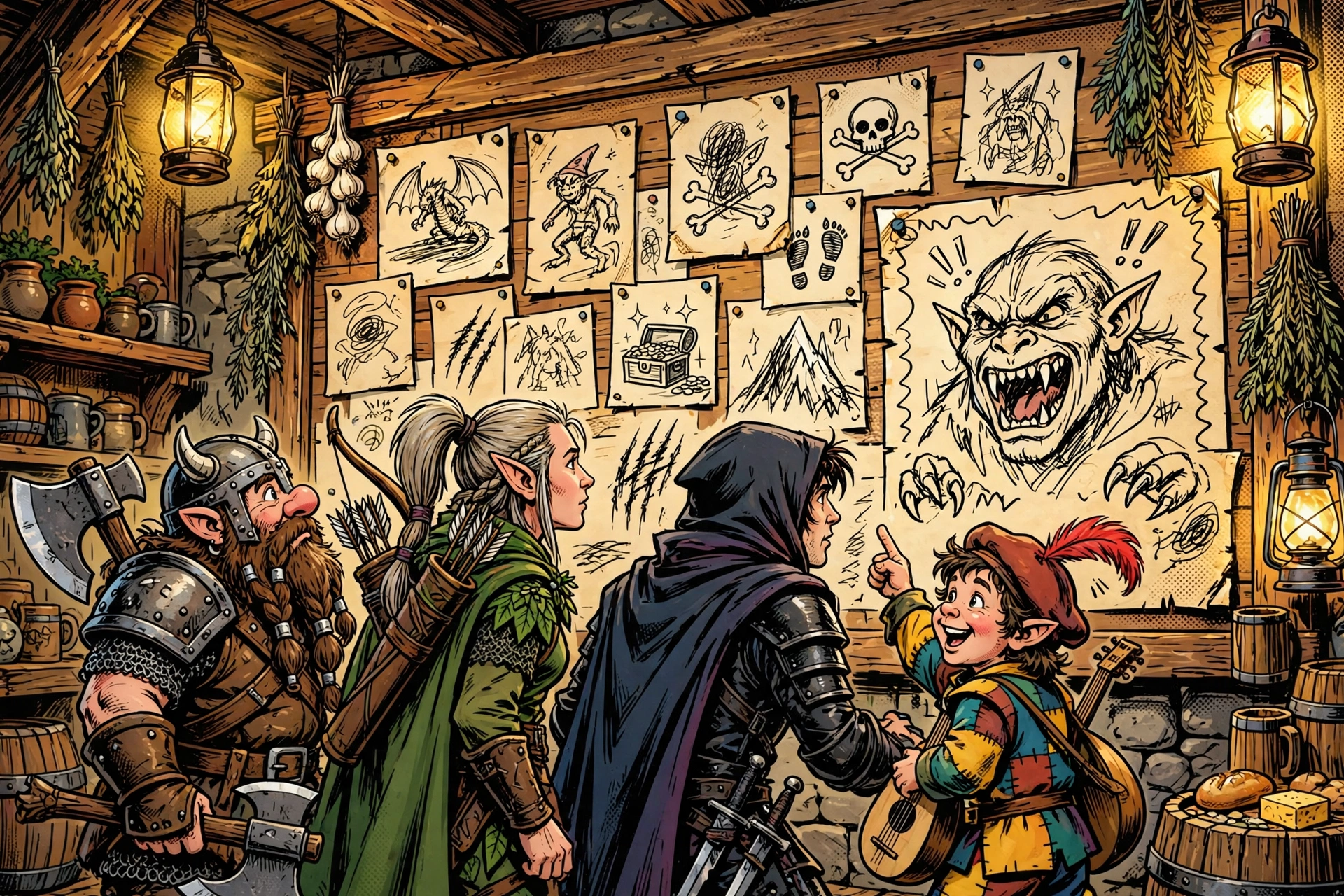
A notice board (also called a bounty board, quest board, or job board) is an in-world posting spot, usually in a tavern, town square, guild hall, or outside the local jail, where NPCs pin requests for help. Bounties. Missing persons. Rats in a cellar, but the big kind. Escort jobs, monster trouble, lost property, weird rumors with a gold piece amount stapled to them.
Your players walk up, read the postings, and pick the one that sounds fun. That is the whole technology. It has been sitting in fantasy towns since before any of us were born, and it solves about six DM problems at once.
Why Bounty Boards Work So Well
Players choose, so players buy in. A quest the party picked off a board never gets the reluctant sigh that a forced plot hook gets. They argued about it at the table. They weighed the rewards. It is their bad decision now, and people defend their own bad decisions with religious fervor.
It is a session saver. Somebody cancels. Your prep fell apart because work ran late and life happened. The main plot needs all five players and you have three. Pull out the board, run a self-contained job, wrap it up by the end of the night. The campaign does not stall, and nobody has to pretend the missing wizard was just quiet today.
It makes the world feel alive. A board changes. The missing blacksmith's daughter poster comes down if the heroes rescue her... and it also comes down if they ignore it for three weeks and somebody else handles it, or nobody does and the town gets darker. Postings appear, expire, and get replaced. Your world starts moving whether the party is watching or not, which is the cheapest worldbuilding trick in the book.
It ends the quest-giver bottleneck. Not every job in your world should come from a mysterious hooded figure in the corner booth. The hooded figure has other things to do. A board lets farmers, merchants, priests, and desperate parents hire help directly, which means your NPCs get voices and your setting gets texture.
It fills downtime without a spreadsheet. Between adventures, the board gives the party short, paid work that keeps them in town, spending gold, meeting locals, and tripping over your actual plot hooks by accident. Downtime stops being a montage and starts being a sandbox.
It respects the DM's scarcest resource. Your prep time. A posting is a paragraph. Five postings is an evening of gaming options, and the four the party does not pick are not wasted work... they stay on the board, age a little, and wait.

How to Use a Bounty Board in Your Game
Stock it with five or six postings. Mix the types: one monster hunt, one social problem, one mystery, one simple job with a twist, one rumor that pays nothing but smells like trouble. Variety is what makes the choosing fun, and the choosing is the whole point.
Write each posting in the NPC's voice. The notice is not a quest summary, it is an advertisement written by a worried, cheap, or slightly unhinged local. "Rats. Big ones. They took my cat." tells your players more about your world than three paragraphs of exposition, and it takes eleven words.
Make the board a physical thing. Print the postings. Pin them to a cheap corkboard. Hand the party the wanted posters. A prop the players can hold turns a game mechanic into a ritual, and rituals are what bring people back to the table. For online games, a shared image of the board does the same job.
Refresh it, and let jobs expire. Every time the party returns to town, something on the board should be new, resolved, or gone. If they ignore the goblin bounty long enough, another crew takes it, and now the goblins are somebody else's problem and that crew is drinking in their tavern. Cause, meet effect.
Let the board feed the main plot. One posting in five should connect to your larger story: a symbol that matches the cult they are chasing, a bounty posted by someone who turns out to be the villain's accountant. The board is a delivery system for hooks your players pick voluntarily, which means they actually follow them.

Frequently Asked Questions
How do I introduce a bounty board in D&D?
Put it somewhere the party already goes: the tavern wall, the town square, the adventurers' guild. Mention it in passing, let a local be reading it when they arrive, and have one posting that pays well enough to be impossible to ignore. Once the party uses it once, it becomes part of their routine in every town.
What should I put on a D&D notice board?
Bounties on monsters or criminals, missing person notices, escort and guard jobs, pest problems with something wrong about them, help-wanted ads from local businesses, festival announcements, and rumor notes that pay in information instead of gold. Aim for five or six postings with different tones: one funny, one grim, one lucrative, one suspicious.
How many quests should be on a notice board?
Five or six is the sweet spot. Fewer than three and there is no real choice. More than eight and your players will spend twenty minutes in committee, which is only fun if your group treats shopping as a combat encounter.
Can a bounty board work in any RPG system?
Yes. A notice board is a framing device, not a game mechanic, so it ports to any fantasy system and most others. The posting gives the who, the what, and the reward. Your system of choice handles the rest. System agnostic quest collections exist specifically because the format travels this well.
How do I keep a quest board from feeling like a video game?
Give every posting an author with a motive, let jobs expire or get taken by rivals, and let some postings be scams, grudges, or mistakes. A board where one notice is a trap set by the thieves' guild feels like a living town. A board where every job is honest work with fair pay feels like a menu screen.
What rewards should bounty board quests offer?
Mostly gold, scaled to the danger, but mix it up: a favor from the blacksmith, a deed to a questionable piece of land, a family heirloom that is definitely cursed, information the party actually needs. The reward is part of the posting's personality, and weird rewards get picked more often than fair ones.

The Board Does the Work, You Take the Credit
The notice board is not a replacement for your campaign. It is the pressure valve that keeps your campaign from cracking when players zig, prep time shrinks, or half the table catches a cold in the same week. Stock it, refresh it, let your players argue over it, and keep your blades sharp and spells prepared, heroes.
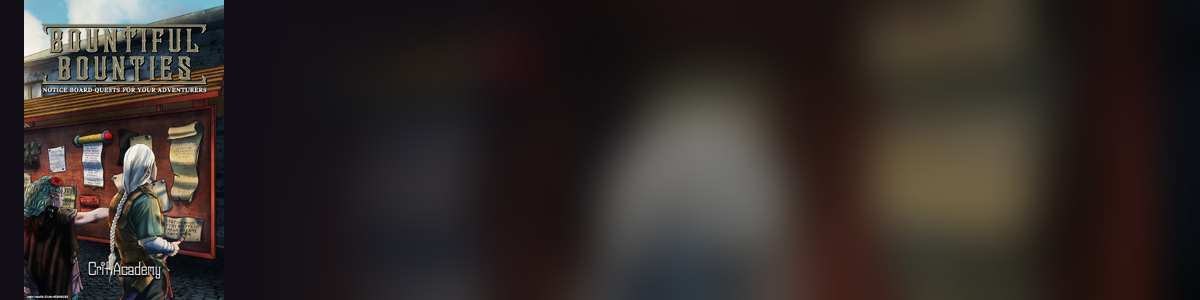
If you would rather not write fifteen postings yourself, that is exactly why we made Bountiful Bounties: 15 notice-board quests for your adventurers, each written as a posting by the local NPC who needs the help, with quest details, noteworthy NPCs, encounters, and rewards included. System agnostic, no prep required, ready to pin to a board tonight. It is $7.99 in the Crit Academy store.
Watt D. Hell Weighs In
I'm Watt D. Hell. I was built to maintain order in the multiverse, and I have reviewed your campaign's quest distribution system. It consists of one exhausted human inventing emergencies at midnight and praying the party bites. The notice board is the first sane upgrade you will ever make: the work advertises itself, the adventurers select their own doom, and when it goes wrong they cannot blame the hooded stranger... they picked the poster with the most exclamation points. Pin one up. Your midnight self will thank you.